
Bridge collapse in Espoo: deficiencies in both planning and constructions of bridge
On 11 May 2023, an accident occurred in Espoo, in which a temporary bridge collapsed. A group of schoolchildren fell approximately five metres along with the bridge, which led to several injuries.
The size of the bridge was 7.7 m x 3.1 m, and it was built out of scaffolding parts. This was not a standard solution by the scaffolding manufacturer that would already have been designed and calculated. Parts from different manufacturers had also been used in the bridge. Structural calculations should have been made concerning the bridge. No such calculations were made, however.
The key parts of the bridge consisted of:
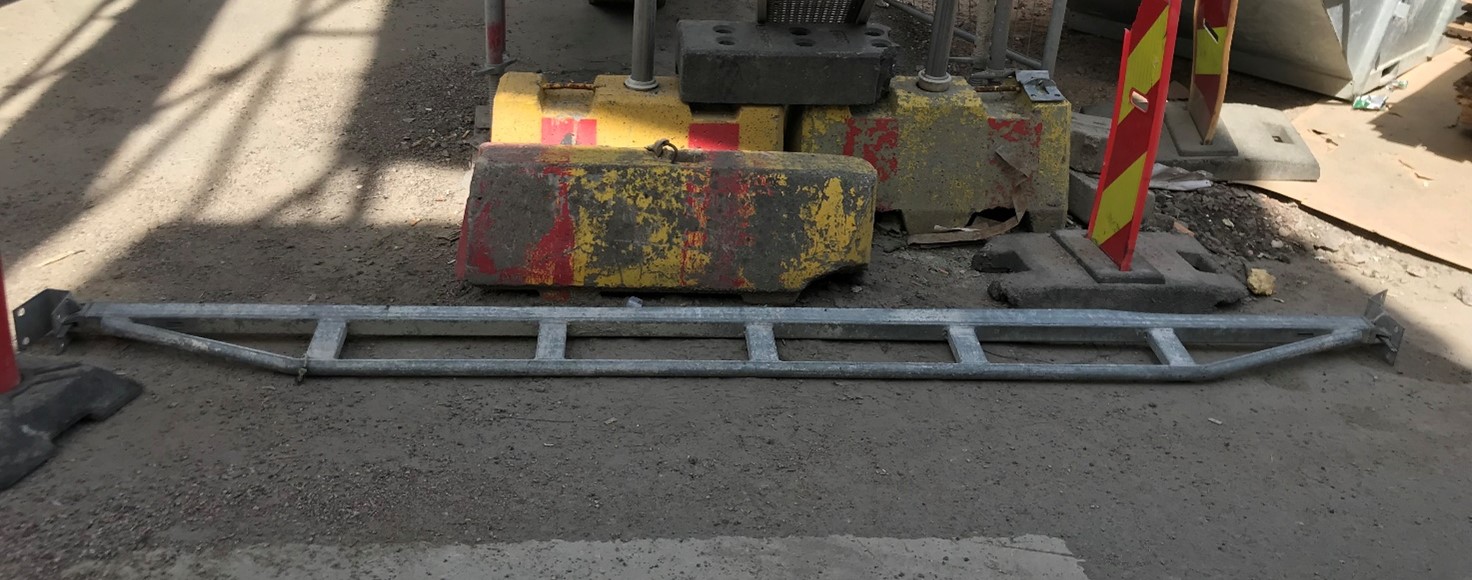
- two 7.7 m longitudinal beams (image 1)
- two 3.07 m transverse beams (image 2)
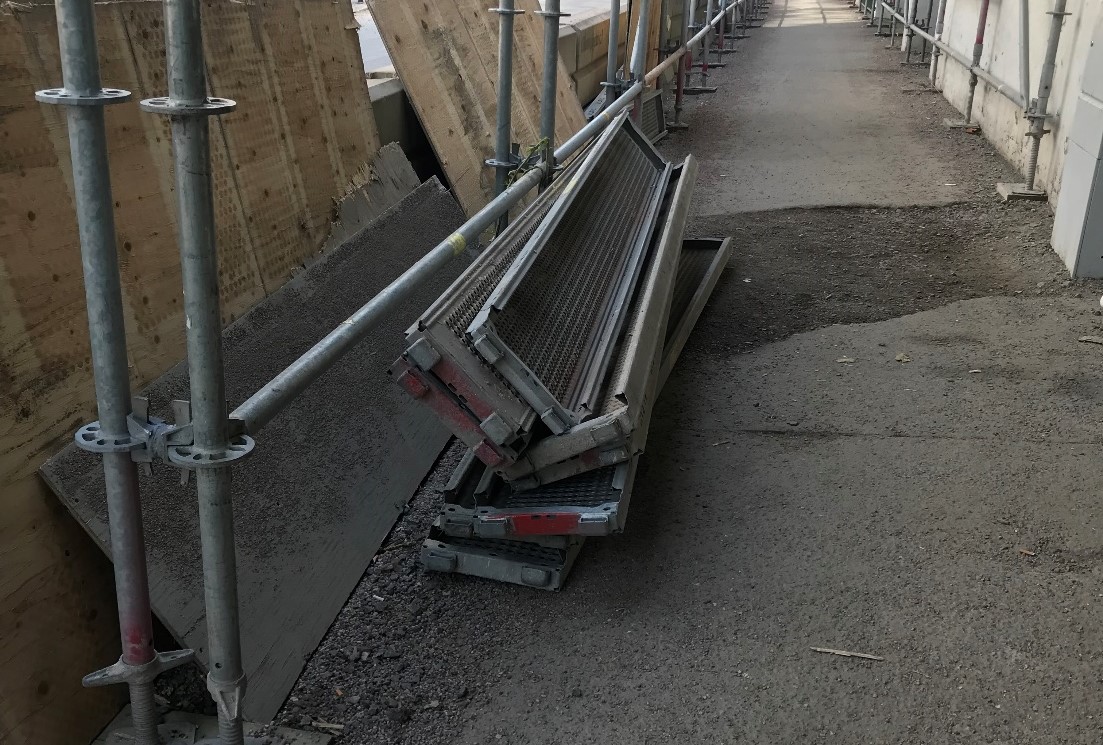
- 27 pcs of scaffolding platforms, lengths: 3.07 m and 1.57 m (image 3)
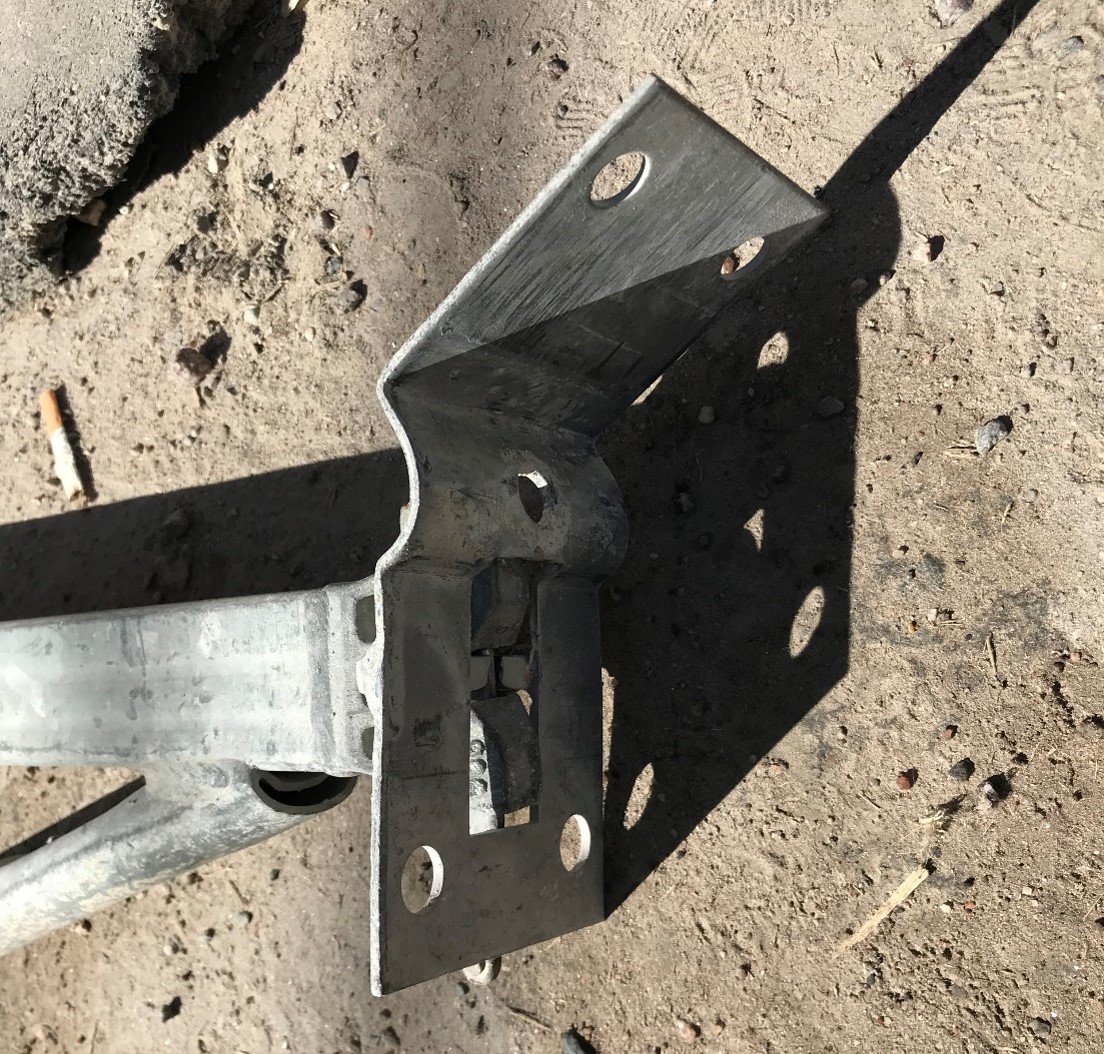
- ends of the transverse beams (image 4) and
- sheets of plywood over the scaffolding platforms.
The weakest parts of the bridge consisted of the fasteners at the ends of the transverse beams, which were not intended for use with load-bearing beams. The parts bent open, at which point the transverse beams, platforms and sheets of plywood fell down. The damage was facilitated by the lack of locking bolts in the fasteners. The parts rested on the round lower part of the longitudinal beam, even though the attachment point according to the instructions of the manufacturer would have been the square top part.
Based on the preliminary investigation, the 7.7-metre longitudinal beams were also weak. Even if the load had been distributed on them evenly, based on calculations they would only have supported a load of 150 kg/m2 at most on a bridge of this size. The load-bearing capacity of the connection pieces of the transverse beams was even lower than that, which is why the damage started from them. The load-bearing capacity of the transverse beams was also deficient; their load-bearing capacity in the bridge structure was approximately 170 kg/m2. The maximum calculated load-bearing capacity of the scaffolding platforms was 300 kg/m2.
Bridges are typically designed using the EN-standards, which require a load-bearing capacity of 500 kg/m2. The bridge did not meet this requirement. Instead of EN-standards, the bridge had been built by adapting the principles of scaffolding construction. The bridge was inspected weekly in accordance with the operating procedures for scaffolding, and a sign called a scaffolding card was attached to it. The scaffolding card claimed that the load-bearing capacity of the bridge was supposed to be 250 kg/m2, but the bridge collapsed with a much smaller load.
During the collapse, there were 23 pupils and one teacher on the bridge, the size of which was approximately 23 square metres. If the calculated average weight of a person on the bridge was 55 kg, the people on the bridge only resulted in a 50–60 kg/m2 of crowd load. The empty weight of the bridge also caused stress to the structures.
"As a conclusion, it can be stated that the longitudinal and transverse beams and especially the connection pieces of transverse beams were clearly too weak. In addition, the overall stability of the bridge was deficient, because there were bolts and diagonal, multi directional struts missing from the bridge," says Kai Valonen, Investigator-in-Charge.
The bridge was not subject to monitoring by the authorities, and therefore the responsibility for the structural review of the bridge rested on the customer and the scaffolding supplier. No structural calculations were made.
The Safety Investigation Authority, Finland must notify the appropriate authority if any faults or deficiencies that the authority must correct urgently in order to prevent future accidents are detected during a safety investigation. In this case, no authority can be identified to whom the notification could be addressed.
"The fact that we have not been able to identify an authority for communal bridges, is worrisome in itself. It seems that temporary and even permanent bridges in municipalities tend to remain outside the supervision of the authorities. The Safety Investigation Authority does not know how many bridges constructed out of scaffolding parts there are in Finland. However, I would urge municipalities in particular to check if the bridges in their area have similar deficiencies compared to the bridge involved in the accident in Espoo. A good rule of thumb is that using a temporary bridge should be as safe as using a permanent bridge", says Investigator-in-Charge Valonen.
The investigation will continue by a review of regulations concerning bridge construction, the practices of bridge and scaffolding construction as well as rescue operations, among other things. The investigation will result in an investigation report and recommendations. It is estimated that it will be completed at the end of 2023.
Further information:
Investigator-in-Charge Kai Valonen, tel. +358 2951 50707
Published 6.6.2023