
Assessment report: Sinking of a boat off Vassaari, Kotka, on 18 June 2026
17.07.2026
17.07.2026
Marine (M)
Accident
Course of events
The accident that killed one person occurred off the island of Vassaari in Kotka on 18 June 2026 when a cabin cruiser began to sink. The boat’s engine room had started to fill up with water during the voyage. There were two persons on board: the master of the boat and a passenger. They became aware of the situation when water began to flow on the afterdeck through the drain holes on the back of the boat. They both put on inflatable life jackets. The master of the boat started to bail water out of the boat, and the passenger called the Emergency Response Centre. Two pleasure boats nearby detected the hazardous situation and pulled next to the sinking boat. People on the boats called out to those on the sinking boat that they should come out of the cabin.
The Emergency Response Centre received the emergency call and transferred it to the Helsinki Maritime Rescue Coordination Command Centre, which alerted units from both the rescue department and the Finnish Border Guard to the task. The Finnish Border Guard’s patrol boat from Kotka was the first to reach the scene. At that time, the boat in need of assistance was already sinking: It first turned on its right side and, about 20 seconds later, sprang upright with stern down, finally sinking underwater for the most part. The master of the boat got out of the boat when it began to sink, but the passenger was trapped inside it.
The patrol boat’s surface rescuer first rescued the master of the boat who was in the water and helped them on board the patrol boat. When the surface rescuer went to the water again to swim to the casualty boat, it sank fully to a depth of approximately 12 metres. As there were no divers in the patrol boat, nothing could be done to help the passenger inside the boat. A Finnish Border Guard diver transported to the scene by helicopter lifted the passenger who had been trapped in the boat on board the patrol boat approximately 2 hours after the casualty boat had sunk.
Background information
The boat that met with the accident was about 40 years old Jurmo 620 model boat equipped with a Mercury V6 petrol engine. The engine had freshwater cooling, where the coolant circulates in a closed-loop system, and the heat is transferred to the sea water circuit through a heat exchanger. In the sea water system, water is circulated by a pump with two plastic drain plugs. These plugs allow the system to be drained for winter storage. The pump had been serviced approximately six weeks before the accident. At that time, both plugs had been found to be in place (Figure 1).
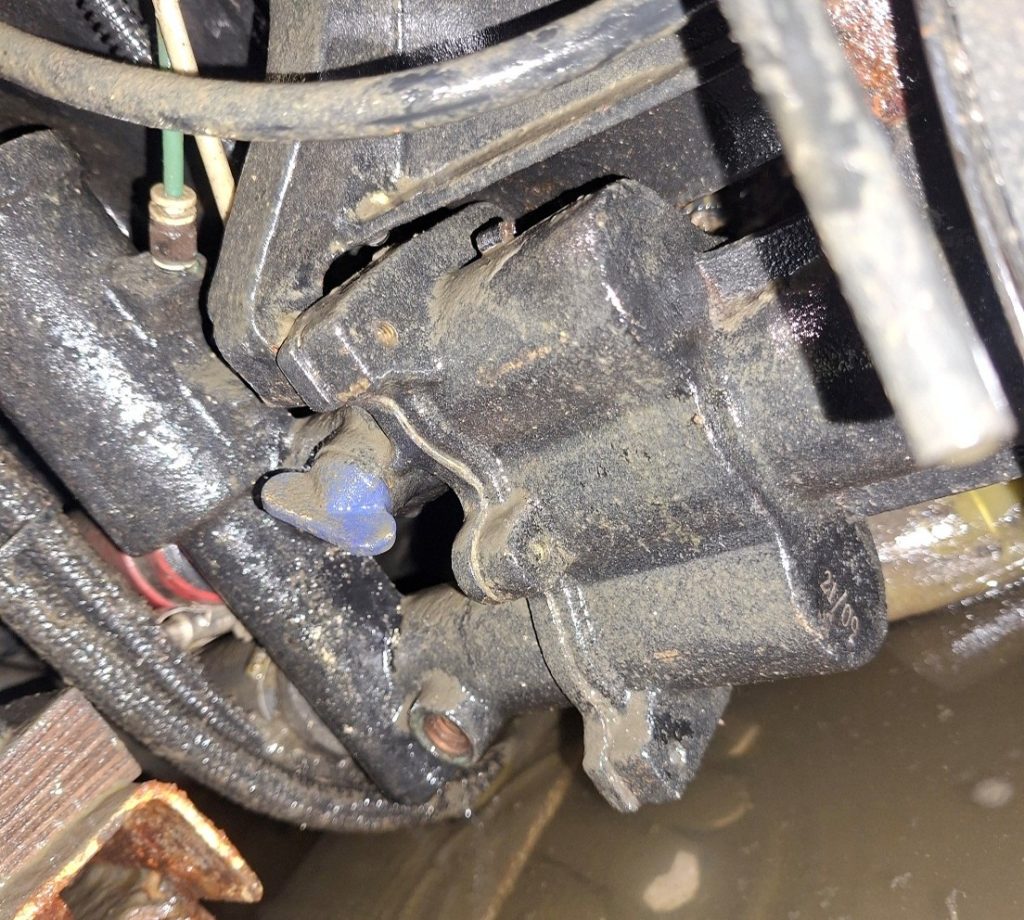
After the accident, it was detected that the lower plug on the pressure face side of the pump was missing (Figure 2). No other possible routes for seawater to enter the boat were found. It is likely that the water entered the boat through a missing plug. Since this plug is located on the pressure face side of the pump, water could only enter the boat when the engine was running. After maintenance, the boat had been driven less than three hours before the accident. A slightly changed waterline was observed on the side of the boat, so the plug may have come off even before the voyage on which the accident happened.
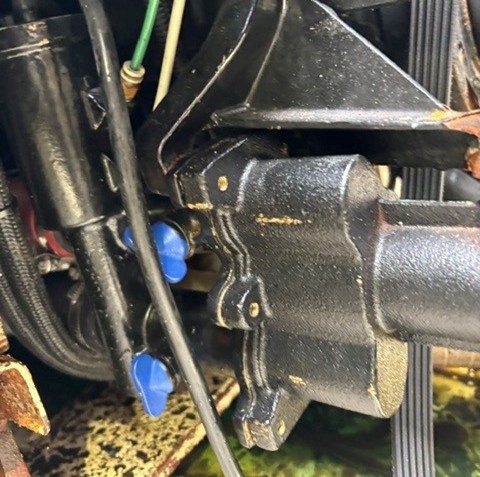
Figure 1. Drain plugs of the cooling water system after maintenance in spring 2026. (Photo: Exstra Marine)
Figure 2. The other plug of the coolant drainage system is missing. Photo: Extra Marine
Observations
The assessment revealed that the boat’s waterline had changed. Water may have entered the boat due to a missing plug already before the day of the accident.
Inboard motorboats are stern-heavy. If their engine room is filled with water and the leak is not under control, inboard motorboats typically turn upright with stern down before sinking. This movement happens very fast. If the people on board have not left the cabin at that time, it is very difficult to get out. If the boat lacks an emergency exit through the cabin window, for example, getting out of a sinking boat requires diving or climbing skills. If the person is wearing a life jacket or an immersion suit, it makes diving more difficult. In practice, in such a case the boat becomes a death trap.
This accident shares similar characteristics with the accident in which the Finnish Border Guard’s patrol boat sunk on 20 June 2020, which was investigated by the Safety Investigation Authority (M2020-01). Back then, it also surprised those on board how suddenly the sinking boat rose upright with stern down. One of the two persons inside the boat was able to escape through the cabin roof hatch, while the other got trapped inside the boat and died. Based on the investigation, the Safety Investigation Authority recommended that the Finnish Transport and Communications Agency Traficom increase awareness of how dangerous leaks are in its communication to boaters.
The Safety Investigation Authority also recommended that the Finnish Border Guard the Border Guard draw up instructions on rescuing people from inside a boat and ensure that the rescue units have the tools and equipment required for the purpose. After the accident, the Finnish Border Guard has acquired equipment and developed methods and readiness to rescue people from inside boats. However, rescuing people from inside a sinking boat is a very demanding and risky operation. Therefore, it cannot be assumed that the mission will always succeed.
The Safety Investigation Authority points out that if a boat is in danger of sinking, people on board must leave the cockpit immediately, and put the life jackets on once they are out on the deck. The Safety Investigation Authority also highlights the importance of inspecting the engine room and bilges before casting off so that any leaks can be detected in good time.
The assessment found that a safety investigation conducted by the Safety Investigation Authority would not provide significant additional information that would lead to substantial safety improvements. The Safety Investigation Authority, Finland (SIAF) will not initiate a safety investigation into the accident.
Ms. Mirva Salokorpi
Chief Safety Investigator,
Marine
02951 50730
firstname.lastname@om.fi