
Report on gas explosion in the hold of MV Salla (FIN) on 5September 2024
04.12.2024
05.09.2024
04.12.2024
Marine (M)
Accident
Events
On 5 September 2024, a gas explosion occurred in the cargo hold of the Finnish dry bulk carrier Salla while it was on its way from Copenhagen to Kolding (Denmark). The explosion damaged the vessel’s hold and its hatches, but did not cause any personnel or environmental damage. The accident was caused by the gases emitted from the cargo in the hold, which were probably ignited by a halogen lamp in the front section of the cargo hold. The ship’s crew initiated the actions in accordance with the alarm list, and the master decided to return to the port of departure. In the port, the rescue department ventilated the cargo space, after which the cargo was unloaded. The Danish maritime authorities decided to stop the vessel for repairs. After the repairs, the Finnish Traffic and Communications Agency (Traficom) inspected the vessel and confirmed its seaworthiness.
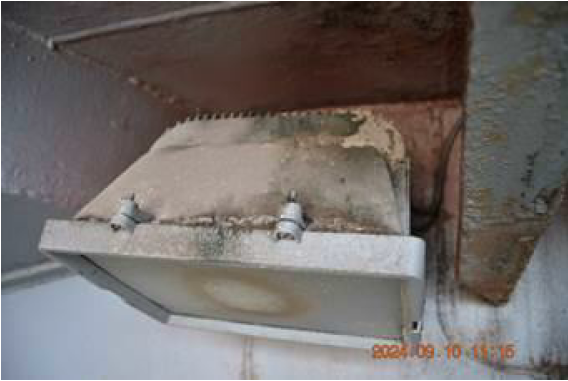
Figure 1. The halogen lamp in the hold. (Photo: Van Ameyde Marine)
Background information
The ship transported incineration waste, called “slag” in English, from a waste incineration plant.
The slag will first be transferred to a covered ventilated space to wait for further transport. The transport of slag in an enclosed space requires that it has been stored in a ventilated and covered space for approximately four months before transport in an enclosed space. It should also be turned from time to time to release hydrogen and methane emitted from incomplete combustion products. It could not be verified – as a part of the assessment work – how the cargo had been stored before it was loaded onto the vessel. The accident shows that it still emitted hydrogen and methane. Methane is an odourless and colourless gas, while hydrogen is a very light gas that spreads rapidly and fills an enclosed space. These gases can form a highly flammable, explosive mixture, which even a small spark can ignite.
Observations
The cause of the accident was the ignition of hydrogen and methane gases in the hold of the vessel.
Combustion waste such as in this case may continue to form an explosive mixture of gases if it has not been properly stored and treated before transport. The resulting gas mixture is difficult to detect without a measuring device suited for the purpose. The event generally emphasises the importance of risk assessment and management. A ship’s cargo must not pose a danger to the crew, to the environment or to the vessel.
Ensuring the safety of cargo is the responsibility of both the contracting shipper and the crew of the vessel. This emphasises the importance of proactive exchange of information between actors. The insurance company was also notified of the accident. The company will investigate the occurrence.
The Safety Investigation Authority, Finland (SIAF) will not initiate a safety investigation into the case.
More information:
Risto Haimila
Chief Safety Investigator,
Marine
0295 150 730